


Six consumable categories top the order list for food processing and packaging plants: aprons, bouffants, gloves, trash liners, shoe covers, and masks. None of them costs much per unit compared with a cut-resistant glove program or a respirator contract. They do move in the highest volumes, though, and they are usually the first things an auditor notices when a GMP program starts to slip.
The specs behind each category trace back to 21 CFR Part 117 or the FSIS sanitation rules. Small choices like bouffant size or glove thickness end up driving both audit findings and reorder volume.
1. Disposable Aprons
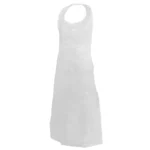
FSIS sanitation regulations (9 CFR 416.5) require aprons, frocks, and other outer clothing on anyone handling meat or poultry product to be disposable or readily cleaned. FDA’s cGMP rule (21 CFR 117.10) sets a similar expectation across food manufacturing, calling for outer garments that protect against contamination and allergen cross-contact.
Our Glossy White PE Apron (SKU A-APR-4158) is 2 mil polyethylene at 28 x 48 inches with a tie-back closure, and it keeps blood, brine, and wash water off the worker’s clothing. White and blue versions give you a simple two-color zone system, so a plant that separates raw from cooked product can put one color on each side and spot a crossover from across the floor.
Plan apron quantities around breaks and zone changes, since a worker who leaves the line should come back in a fresh one. For workers whose forearms reach into product, our 18-inch polypropylene sleeves close the gap between glove cuff and apron.
2. Bouffant Caps and Beard Covers

The cGMP rule names hair nets, caps, and beard covers specifically as acceptable hair restraints. Most GMP programs build a fresh bouffant into the gowning sequence at each entry into production, so consumption follows door traffic as much as it follows staffing.
Sizing causes more trouble than buyers expect. A 21-inch cap works for short hair, while longer or thicker hair needs a 24-inch or 28-inch cap to stay contained through a full shift. We stock polypropylene bouffants at 21 inches, 24 inches, and 28 inches.
For role or zone coding, our standard bouffant cap comes in green, red, yellow, and orange along with white and blue. It ships 1,000 per case with double-stitched seams, and it comes off an automated line with no human contact during manufacturing.
Any worker with facial hair also needs a beard cover. Beard cover quantities depend on who happens to be on shift, so we recommend giving them a separate par level on your baseline order.
3. Disposable Gloves

Gloves are the highest-volume PPE line item in most facilities we supply. Section 117.10 requires gloves used in food handling to stay intact, clean, and sanitary, and plant SOPs usually turn that into a fresh pair whenever a worker changes tasks or touches a non-food-contact surface.
Nitrile has become the default for food contact because it takes the latex allergen question off the table. Thickness deserves more attention than it usually gets, and we match gloves to tasks this way:
- 5 to 5.5 mil: our nitrile gloves for packaging lines and inspection work, where dexterity drives speed
- 7 or 8 mil nitrile for raw protein and anything near bone fragments or sharp packaging edges
- A 6 mil nitrile with a textured fish scale grip for wet, slick product
- Reusable 18 mil natural latex canners for sanitation crews, kept out of production in latex-free plants
- A cut-resistant glove worn under a disposable nitrile for knife work
Blue became the standard glove color in food plants because a torn fingertip shows up against almost any product. Visual contrast and metal detectability are separate properties, though. If your HACCP plan counts on detection equipment to catch glove fragments, write a detectable glove into the spec.
Before you lock in any food-contact glove, ask for the manufacturer’s compliance statement. Most cite 21 CFR 177.2600, and your auditor will want a copy on file.
4. Trash Liners
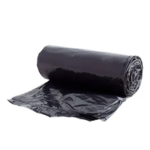
Liners fall outside the PPE category, but they rank among the items our food customers order most because waste volume rises and falls with production. Most liner complaints trace back to fit or film type.
A liner too small for its can slips down and tears when someone loads it, while an oversized one wastes film on every bag. Our 40 x 46 inch, 1.5 mil low-density liner fits 40 to 45 gallon cans and ships 100 per case. We also carry heavier options up to a 42 x 48 inch, 3.0 mil bag.
Low-density film stretches before it punctures, which matters for bone and trim or for packaging scrap with sharp corners. Paper and film off-cuts can go into a lower-cost bag like our natural 33 x 40 liners, which come in two gauges. Plants tracking product loss often prefer clear liners, since sanitation and QA can see what goes into the waste stream.
5. Shoe Covers
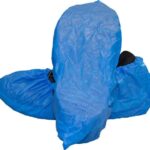
Food plants use shoe covers differently than labs or hospitals do. Production workers usually wear dedicated plant boots and pass through a boot wash. Shoe covers mostly go to the people who don’t, including QA staff walking in from the office, maintenance contractors, auditors, visitors, and drivers stepping into a dock area.
On a wet floor, slip resistance outranks every other spec. Our Disposable Polypropylene Slip-Resistant Shoe Covers are waterproof and ship 150 pairs per case, and our Cerulean Polyethylene Shoe Cover with Tread adds grip for wash-down areas. A smooth-soled cover on a wet production floor creates a slip hazard your OSHA 1910.132 hazard assessment would need to address.
Dry packaging areas can run lighter polypropylene or SMS covers. Visitors crossing a wash area need taller coverage, which our 16-inch clear polyethylene boot covers provide. A tacky mat at the warehouse-to-packaging transition pulls loose debris off covers and cart wheels before it reaches the clean side.
6. Procedure Masks
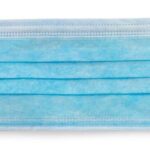
In a food plant, a mask protects the product first by keeping droplets from a cough or sneeze off exposed food. The requirement shows up most often on ready-to-eat and open-product packaging lines, usually because a customer spec or third-party audit scheme asks for it.
Our Earloop Level 1 Procedure Mask is a 3-ply mask with an adjustable nose piece and covers most hygiene-driven requirements. Areas that need more fluid resistance can step up to our Level 2 Surgical Face Mask or the Secureshield 99% BFE mask.
Keep one distinction clear in your written PPE program. A procedure mask is not a respirator and offers no protection against flour dust, spice particulate, ammonia, or sanitation chemical mist. If your hazard assessment identifies an airborne exposure, OSHA’s respiratory protection standard (29 CFR 1910.134) applies, and you’ll need NIOSH-approved respirators with fit testing for required use. For sanitation crews spraying chemicals, a disposable full splash shield paired with an apron covers the face and front of the body.
Keeping All Six on the Shelf
These categories move on a predictable rhythm tied to staffing and shift schedules, which makes them good candidates for a standing baseline order. When we work with a food processor, we review existing back stock and purchasing patterns first, then set a monthly baseline that we adjust as volumes change. Putting all six under one supplier also makes it easier to keep the packaging room and the cut floor on the same products.
Plants that want to secure supply ahead of demand can use our Warehouse Program, which stores purchased inventory in our Connecticut warehouse until you need it. High-volume accounts can import directly through our Large Volume Purchase Program. We are FDA registered and SBA-certified as a Woman-Owned Small Business, with more than 30 years of experience supplying facilities where contamination control matters.
Our professional services team can review your PPE needs and current price points in a 30-minute call. Browse our full food packing and processing lineup, or call (833) 500-7277 and we’ll set up a time that works for your plant.