
Seven disposable categories account for most of the consumable volume in a research lab: gloves, sleeves, lab coats, trash liners, autoclave products, masks, and shoe covers. The list holds for BSL-2 culture suites and vivariums as much as for analytical cores and teaching labs. Each item costs little per unit, but labs go through them by the case. A substitution in any one category can also put a lab out of step with its own written program.
OSHA’s Laboratory Standard (29 CFR 1910.1450) requires the Chemical Hygiene Plan to define the criteria a lab uses for PPE. Section 1910.132(d) adds a documented hazard assessment behind each selection. Biological work brings in the BMBL 6th edition and the Bloodborne Pathogens Standard (1910.1030). Each entry below covers the spec details buyers tend to miss, plus the products we stock for that need.
1. Disposable Gloves

Gloves carry more hazard-specific selection logic than anything else on this list. Under 29 CFR 1910.138(b), employers have to choose hand protection based on how the glove performs against the actual task, the chemicals involved, and the length of contact. Most labs run nitrile as the general barrier and keep separate gloves for solvent work and aseptic technique.
Exam-grade nitrile made to ASTM D6319 covers routine bench work. Thickness sets the tradeoff between dexterity and durability. For chemical exposure, ASTM F739 permeation data tells you how long a specific glove holds against a specific chemical, and that number belongs in the CHP. A thin exam glove offers incidental splash protection only, so techs should change it as soon as a solvent touches it.
Matching gloves to lab tasks usually looks like this:
- Routine bench work and cell culture: our APP Powder Free Blue Nitrile 4.5-5.0 MIL Exam Glove, powder-free and latex-free, 100 per box and 10 boxes per case
- Aseptic procedures and sterile field work: our Nitrile Sterile Exam Gloves
- Extended solvent handling and waste consolidation: Alphatec Solvex elbow-length gloves, rated EN 374 Type A, with no cotton flocking to shed lint
- Glass washing and facility cleaning: our 8 mil blue nitrile glove (SKU 2022W-L), a 12-inch industrial-grade glove with a micro-textured surface for wet grip
- University sustainability programs: BIO-NIT biodegradable 4 mil nitrile exam gloves (SKU G-422), in sizes XS through XL
The high-visibility orange on the Safety Zone glove does useful work in a double-gloving protocol. Pair an orange outer glove with a blue inner glove, and a tear in the outer layer shows up the moment it happens.
2. Disposable Sleeves

Sleeve covers close the gap between the glove cuff and the lab coat sleeve. That gap opens every time a tech reaches into a biosafety cabinet or across a cage rack, which is exactly when contamination risk peaks. Sleeves also keep the coat cuff off the cabinet work surface, so they protect the culture as much as the worker.
Material choice follows the hazard. Our 18-inch polyethylene sleeves have elastic at both ends and ship 100 per bag, 10 bags per case, for liquid splash work. The Winter White 18-inch polypropylene sleeve breathes better during long dry tasks. For fluid exposure over a long session, the Pearl White 18-inch microporous sleeve and the 18-inch DuPont Tyvek sleeve give the most barrier in the range.
Train staff to pull the glove cuff over the sleeve’s elastic end. Liquid then runs down the outside of the glove and never reaches the skin.
3. Disposable Lab Coats
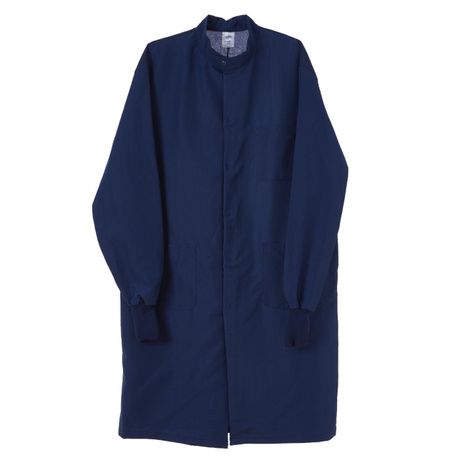
At BSL-2, the BMBL calls for protective coats, gowns, or smocks in the lab and removal before staff leave the area.
Basis weight and fabric construction drive durability. Our 35 gram polypropylene coats, such as the French Navy no-pocket coat, have an elastic wrist and snap front and ship 30 per case in sizes MD through 5X. They suit dry labs and visitor coverage. General bench work calls for the Ultra White SMS Lab Coat (SKU L-230-SIZE-SMS-WH), a 50 gsm three-layer SMS coat. It has a knit collar and cuffs, three pockets, and a snap front. The Cornflower Blue SMS coat carries the same build if you color-code zones. Higher fluid exposure calls for the Pearl White Microporous Lab Coat.
If your biosafety officer wants a documented fluid barrier level for a procedure, specify a rated gown such as our Cornflower Level 2 Isolation Gown for that task.
Sizing affects adherence more than most buyers expect. Staff will wear a coat open if it won’t close over their frame, so stock the full size range. No-pocket versions help in a different way, since they keep pens and phones from traveling between clean and dirty zones.
4. Trash Liners
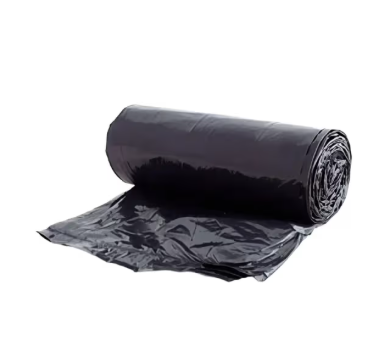
General waste in a lab moves in large volumes: packaging, paper towels, pipette tip boxes, and spent gloves from non-hazardous work. Liners fail most often at the bottom seam or where a corner punctures the film. Low-density liners stretch around sharp-edged loads and resist puncture better for their thickness.
Fit matters as much as film. A liner should measure about half the can’s circumference across the width. Its length should cover the can depth plus half the diameter, with a few inches of overhang. Our liner catalog starts at 15 x 15 bench-top sizes. At the large end, the 40 x 46 1.5 mil low-density liner fits 40 to 45 gallon receptacles and ships 100 per case. Clear liners let custodial and EHS staff spot a glove or sharp in the wrong stream before it leaves the floor.
Biohazard bags belong in a separate stream. Regulated waste goes into red bags such as our 12-gallon biohazard bags with ties, 24 x 25.6 inches and 500 per case. Keep both stocked at every station so nobody improvises when one runs out.
5. Autoclave Products
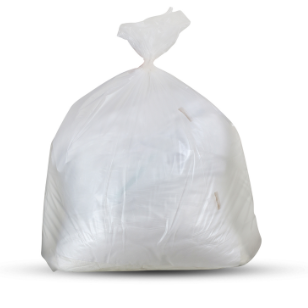
Labs buy autoclave products for two separate jobs. Instruments and small glassware go through in sterilization pouches, while autoclave bags hold biohazardous waste for decontamination before disposal.
Our Sterilization Pouches self-seal and carry built-in steam and chemical process indicators. They work in steam and EtO cycles and come in seven sizes from 2.25 x 2.75 inches to 12 x 16 inches. For waste, our Autoclave Biohazard Waste Bag (SKU A-38X47-CL-5023) is a clear, unprinted 1.8 mil bag with a 44 gallon capacity. It ships 10 bags per roll and 10 rolls per case.
A chemical indicator shows exposure to steam and nothing more. Validate cycles with biological indicators, typically Geobacillus stearothermophilus spore strips, on the schedule your biosafety program sets. Loading habits affect results as well. Leave waste bags loosely closed so steam can get in, and add a small amount of water to dry loads. Set every bag in a secondary tray.
6. Masks
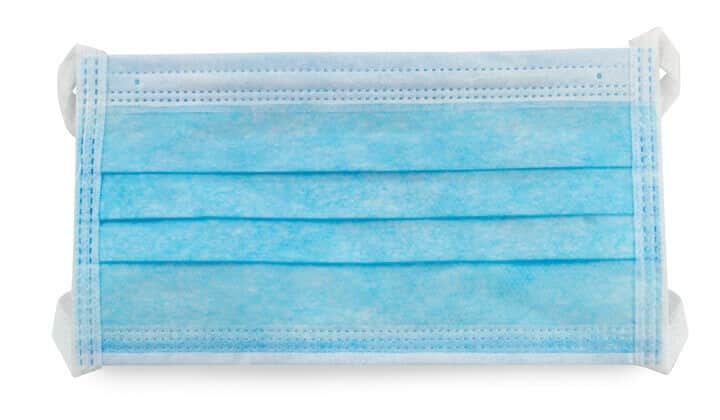
Surgical and procedure masks block splash and droplets, and they keep the worker’s breath off open cultures. They offer no respiratory protection. Aerosol-generating work or agents with airborne transmission call for an N95 or higher respirator under 29 CFR 1910.134, with medical evaluation and fit testing.
ASTM F2100 rates masks at Level 1, 2, or 3, with synthetic blood penetration testing at 80, 120, and 160 mmHg. Our Earloop Level 1 Procedure Mask handles routine bench work and product protection. The Level 2 Surgical Face Mask adds a fluid-resistant middle layer and a soft cellulose inner lining, and it ships 10 boxes per case. Choose it for tasks like opening centrifuge tubes or pipetting larger volumes of biological material. We also carry Secureshield 99% BFE surgical masks.
A mask alone leaves the eyes open. Pair it with ANSI/ISEA Z87.1 goggles, or add our Disposable Full Splash Shield wherever splash is likely.
7. Shoe Covers
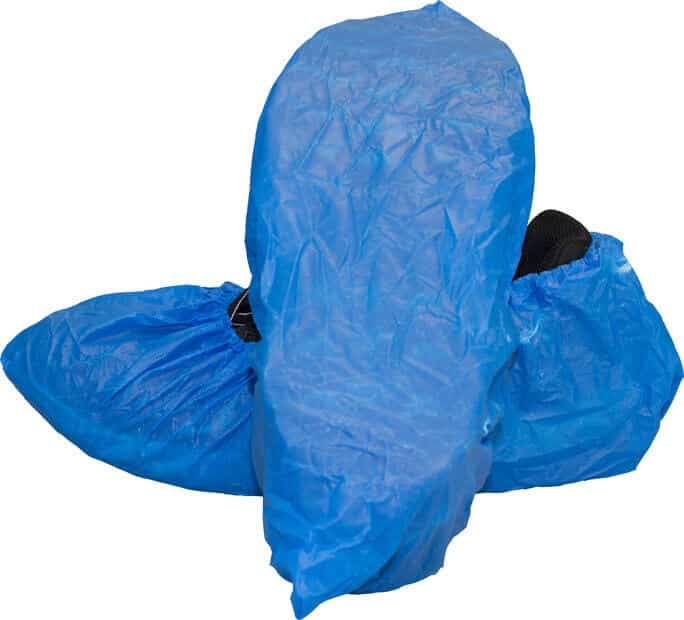
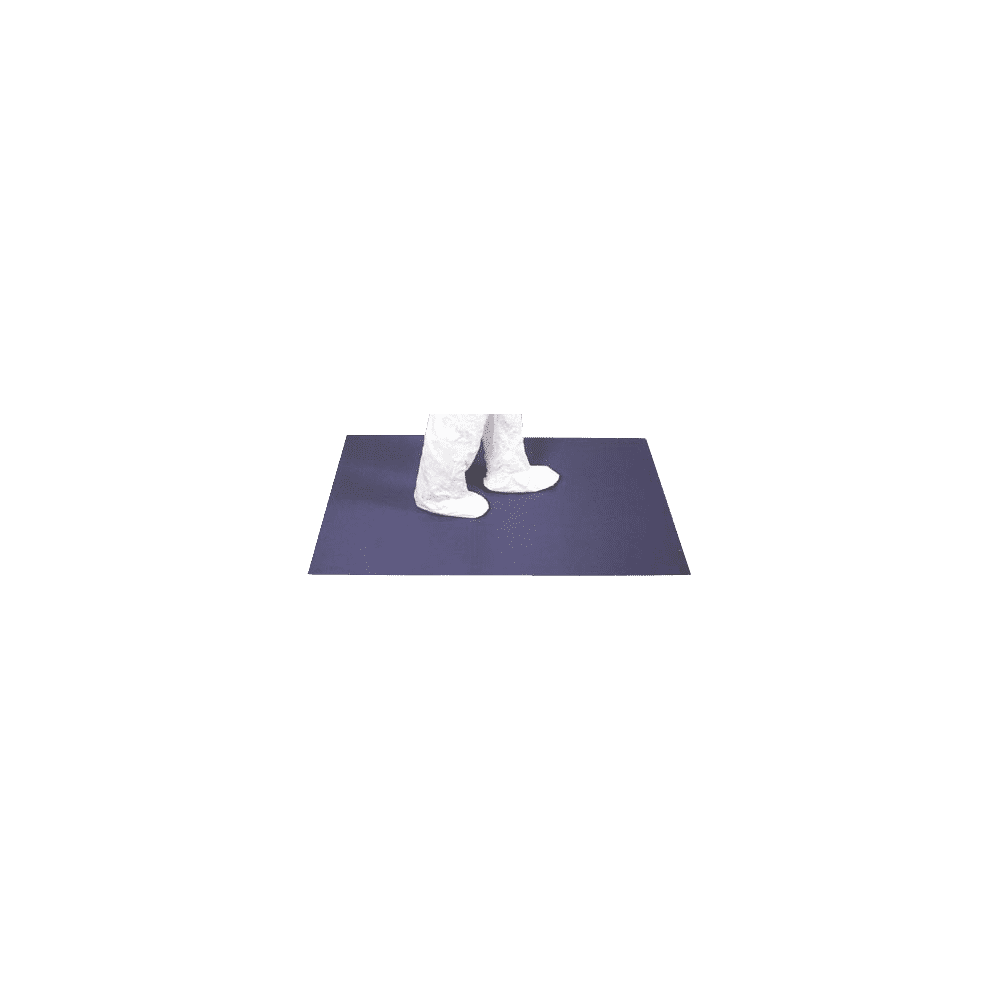
Vivariums usually write shoe covers into their gowning SOPs. They keep floor contamination from walking out of a room and street debris from walking in. At the doorway, a Tacky Mat pulls particulate off soles before anyone steps into the clean side.
On a wet cage wash floor, a smooth polyethylene cover becomes a fall hazard. Our Disposable Polypropylene Slip-Resistant Shoe Covers are waterproof with an elastic closure and ship 150 pairs per case. The Cerulean Polyethylene Shoe Cover with Tread also adds grip. For dry suites, the APP Cornflower Polypropylene Shoe Cover breathes well over a full shift. Wet areas that need more height call for 16-inch clear polyethylene boot covers or Tyvek boot covers.
Keeping All Seven on the Shelf
Once a CHP or biosafety SOP names a glove, coat, or bag spec, a substitution during a shortage can trigger a review. A stockout in any of these seven categories usually forces exactly that kind of substitution, and it tends to happen at the worst possible point in a study.
We have supplied PPE for over 30 years from our warehouse in North Branford, Connecticut. APP holds FDA registration and SBA Woman-Owned Small Business certification, and research customers such as The Jackson Laboratory and the Broad Institute order from us. Our Warehouse Program lets a lab reserve inventory and store it in our secure facility, then pull it on its own schedule. High-volume buyers can also use our Large Volume Purchase Program for direct imports. To see how that worked for one institution, read our university research lab case study, or our earlier post on PPE compliance at the workstation.
Our life sciences team offers a 30-minute introductory call that covers a PPE needs assessment, inventory strategy, and a price review. Call us at (833) 500-7277 or get in touch here.